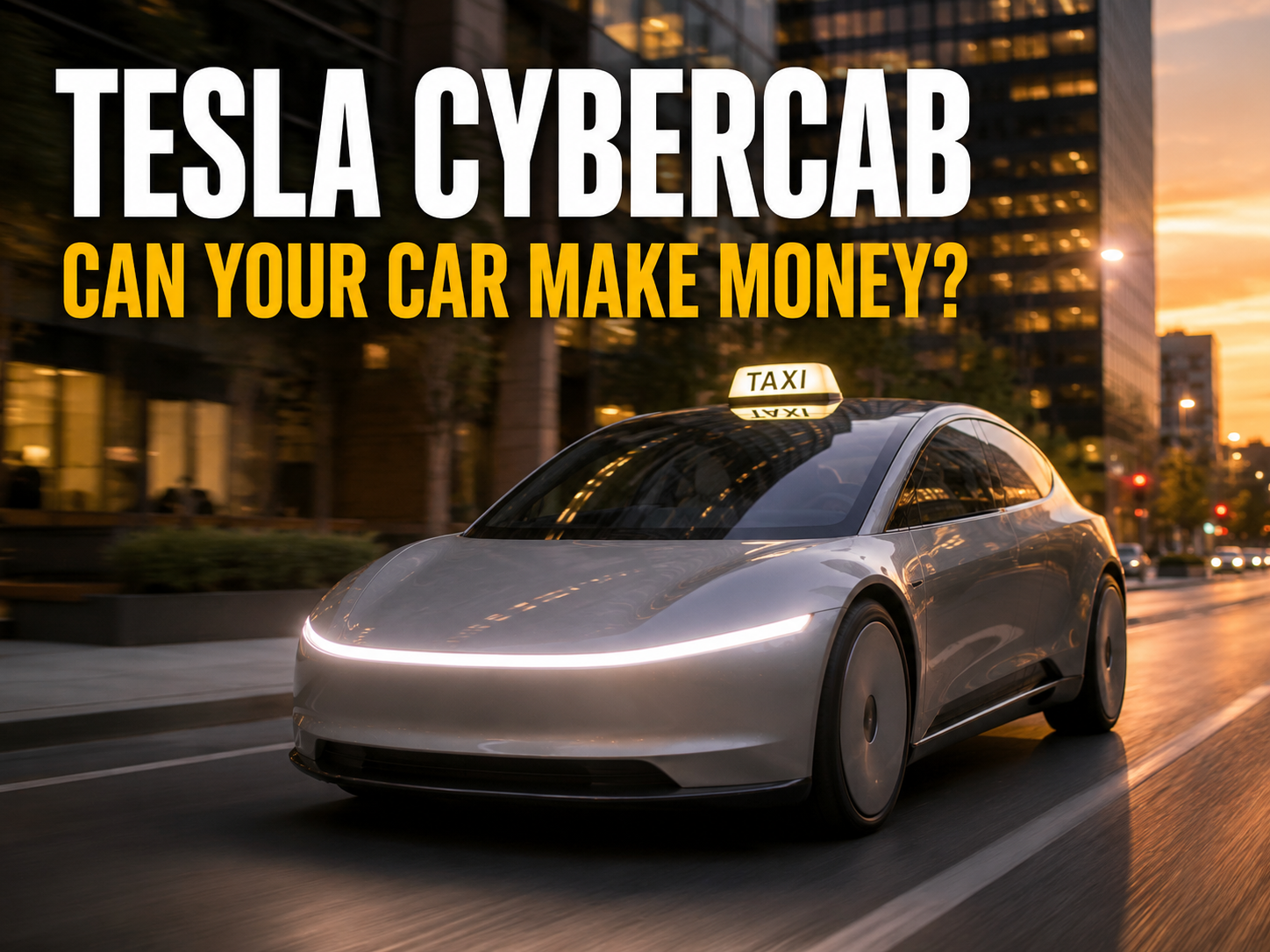
Most cars spend the majority of their lives doing absolutely nothing.
You drive to work.
Park for eight hours.
Drive home.
Then park again overnight.
For decades, that has simply been part of owning a car.
Tesla wants to change that.
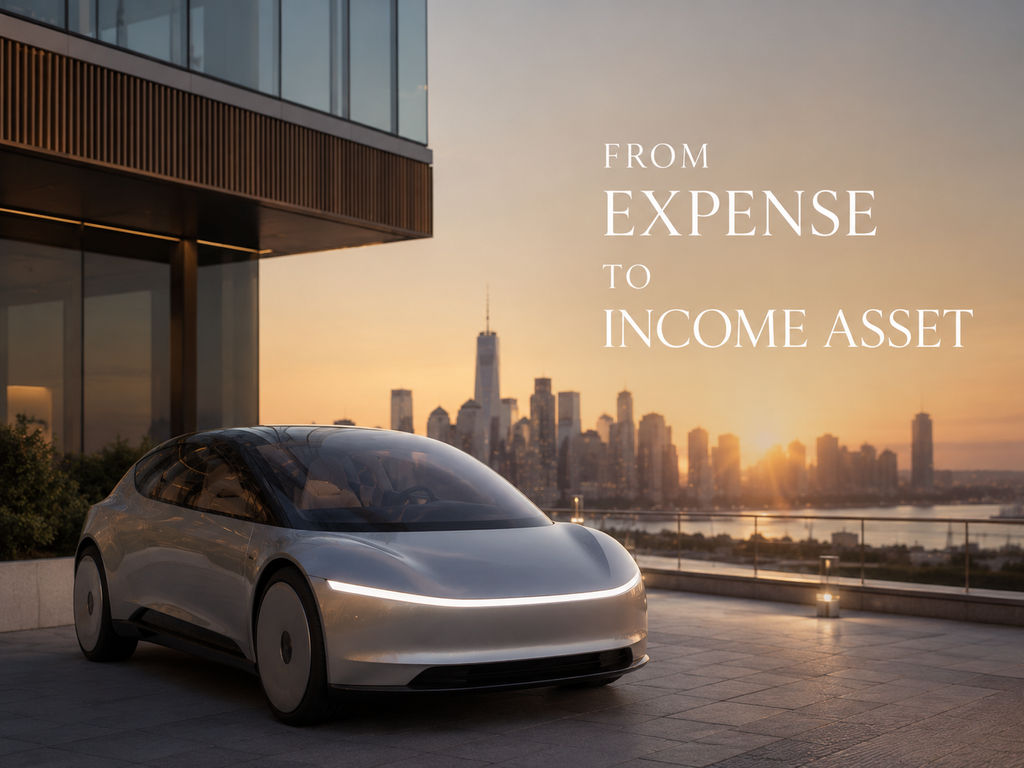
With Cybercab and its Robotaxi network, Tesla is pursuing a future where a vehicle may not just cost you money—it could potentially generate income when you are not using it.
And that idea may be far more important than the Cybercab itself.
What Is Tesla Cybercab?
Cybercab is Tesla’s purpose-built autonomous Robotaxi.
Unlike a traditional Tesla, Cybercab is designed around autonomous transportation from the beginning. It is a two-seat vehicle with butterfly-style doors, a large touchscreen and, most importantly, no steering wheel.
As of September 2026, Tesla says Cybercab rides are available in limited areas of Austin, Texas. Tesla’s broader Robotaxi service is also operating with Model Y vehicles in several U.S. cities.
Tesla also says people interested in purchasing an individual Cybercab or a fleet of Cybercabs for commercial purposes can submit an inquiry to the company.
That last point is especially interesting.
Because it begins to move Cybercab from simply being “Tesla’s taxi” toward something that could potentially become a business asset.
Imagine This Future
Here is where Tesla’s vision gets fascinating.
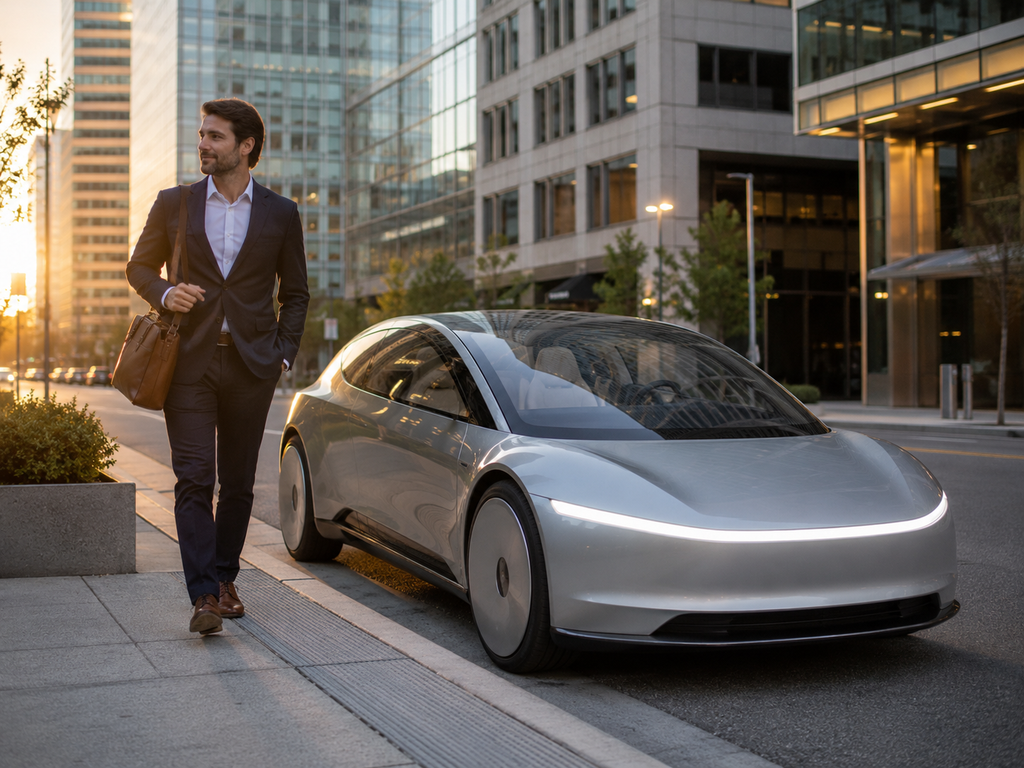
Imagine owning an autonomous Tesla.
7:30 AM:
Your car takes you to work.
8:00 AM – 5:00 PM:
Instead of sitting in a parking lot, the vehicle enters Tesla’s Robotaxi network and carries passengers.
5:30 PM:
The car leaves the network and returns to your office to pick you up.
Evening:
If you do not need it, the vehicle could potentially go back to work.
In other words:
You use the car when you need it.
The car works when you don’t.
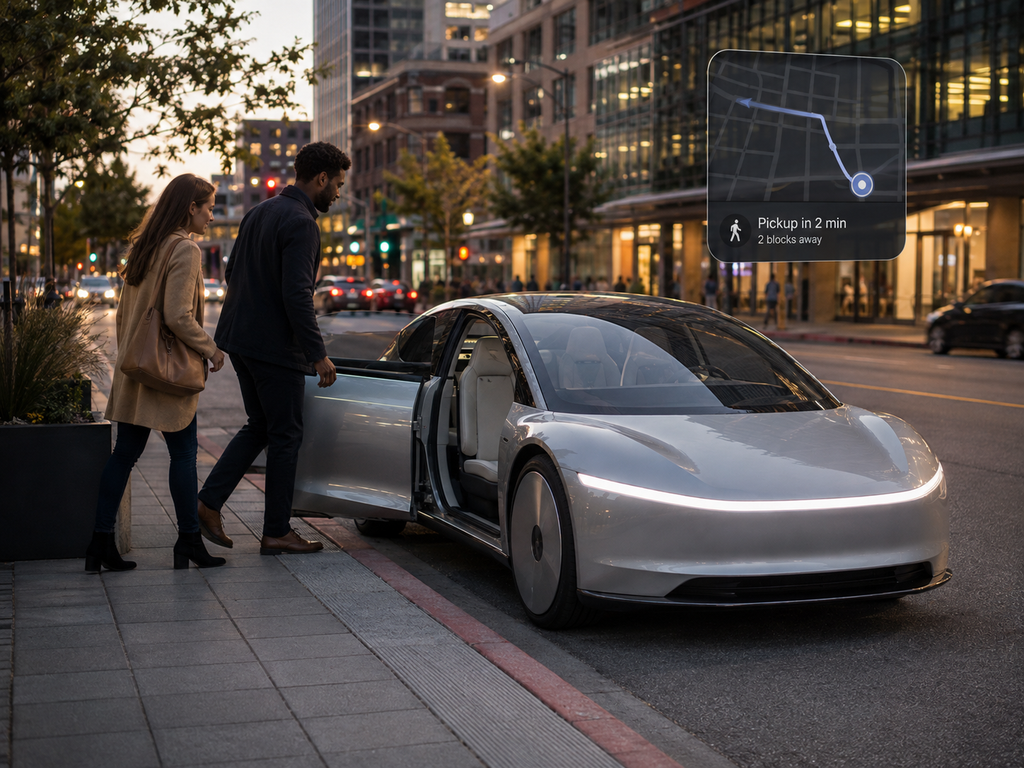
This exact consumer experience is not commercially available today, and Tesla has not confirmed that Cybercab owners will simply be able to switch between personal use and Robotaxi service.
But the basic concept is not new.
Back in Tesla’s 2016 Master Plan, Part Deux, Elon Musk described a future where Tesla owners could add their vehicles to a shared fleet through the Tesla app and generate income while they were at work or on vacation.
Ten years later, pieces of that idea are finally beginning to appear in the real world.
From Depreciating Asset to Income-Producing Asset
This could fundamentally change the economics of car ownership.
Today, when you buy a $40,000 or $50,000 car, you normally expect:
Depreciation.
Insurance.
Maintenance.
Charging or fuel costs.
The vehicle is almost always an expense.
But imagine if that same vehicle could produce revenue for several hours every day.
Here is a purely hypothetical example.
| Robotaxi Operation | Hypothetical Net Income* |
|---|---|
| 3 hours/day | $750/month |
| 6 hours/day | $1,500/month |
| 10 hours/day | $2,500/month |
Example assumes $10 per operating hour for 25 days per month. This is only an illustration—not a Tesla forecast or estimate. Actual economics would depend on fares, utilization, Tesla’s platform fee, insurance, charging, maintenance, cleaning, depreciation, taxes and many other factors.
The numbers are not the important part yet.
The important question is:
What happens when a car stops being something you only consume and becomes something capable of producing revenue?
That could completely change how people calculate the true cost of owning a vehicle.
But There Are Some Big Problems to Solve
This future is exciting, but it is not guaranteed.
Autonomous vehicles introduce a completely different set of questions.
Who pays when an autonomous Robotaxi crashes?
How much will commercial insurance cost?
Who cleans the vehicle between passengers?
Who handles charging?
How quickly will a heavily used Robotaxi depreciate?
How much of each fare will Tesla keep?
And most importantly, will regulators allow individually owned autonomous vehicles to operate commercially?
These questions could determine whether owning a Robotaxi becomes a genuinely profitable business or simply an interesting technological experiment.
Tesla itself acknowledges that the success of Robotaxi will depend on factors including consumer adoption, autonomous-driving acceptance and competition.
Why Cybercab Matters More Than Just Another Tesla
I don’t think the most interesting thing about Cybercab is its design.
It isn’t even the fact that it has no steering wheel.
The real story is the business model behind the vehicle.
Tesla has traditionally made money by selling cars.
But autonomous vehicles potentially create another model:
Vehicle Sale → Autonomous Driving → Robotaxi Network → Recurring Ride Revenue
If millions of vehicles eventually participate in that network, Tesla would no longer be just an automaker.
It could also become a massive transportation platform.
And for vehicle owners, the definition of car ownership itself could change.
For the last 100 years, we have asked:
“How much does this car cost?”
In the Robotaxi era, we may eventually ask a very different question:
“How much can this car earn?”
That may be the real revolution behind Tesla Cybercab.
Robin Car Life
Good cars. Smart choices. Enjoy the drive.